
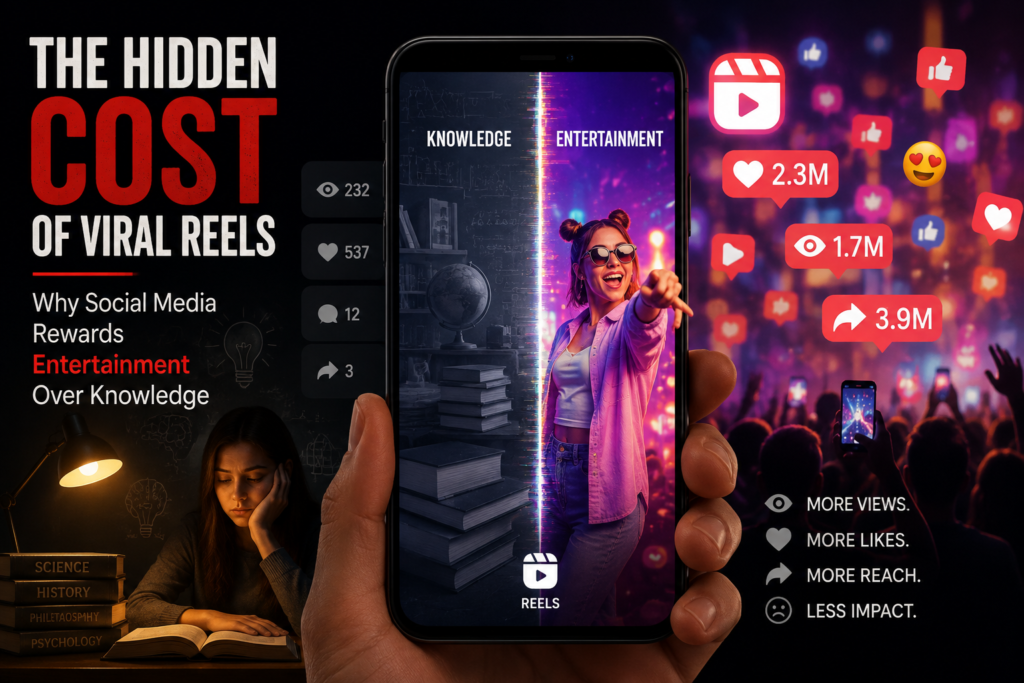
The Hidden Cost of Viral Reels: Entertainment vs. Knowledge on Social Media
In the fast-paced world of social media, the rise of viral reels has captured the attention of millions. These short, engaging videos often dominate our feeds, showcasing everything from dance challenges to comedic skits. But what lies beneath this entertainment-driven trend? As social media platforms increasingly prioritize entertaining content, the implications for knowledge acquisition and educational material become starkly apparent. This article dives deep into the dynamics of viral reels, exploring how they shape consumption habits and the potential hidden costs associated with this shift.
In This Article
The allure of viral reels is undeniable. With their catchy visuals and quick engagement, they have become a staple for users seeking instant gratification. However, as we indulge in this entertainment, it’s essential to consider the broader impact on our content consumption. Are we sacrificing educational value for a fleeting moment of amusement? Understanding this phenomenon is crucial for users, creators, and anyone intrigued by the evolving nature of digital culture.
Understanding Viral Reels
Viral reels are short video clips that quickly gain popularity through shares and engagement on social media platforms. Their success is often measured by the number of views, likes, and shares they accumulate in a short timeframe. These reels typically feature relatable content, humor, or visually striking elements that resonate with a wide audience.
The mechanics of virality hinge on several factors, including timing, trends, and social media algorithms. For instance, when a video aligns with current events or popular challenges, it stands a better chance of going viral. Additionally, the algorithms of platforms like TikTok and Instagram are designed to amplify content that garners immediate engagement, thus favoring entertaining reels over educational material. This environment encourages creators to focus more on entertainment, often at the expense of informative content.
The Algorithm Behind the Entertainment Bias
Understanding social media algorithms is crucial to grasping why entertainment often takes precedence over education. These algorithms are sophisticated systems that analyze user behavior to determine which content to promote. They prioritize engagement metrics such as likes, shares, and comments, which tend to favor entertaining content that captures immediate attention.
When users engage with a particular type of content, the algorithm takes note and subsequently shows them more of that similar content. This creates a feedback loop, where entertaining reels are continually highlighted, while educational content struggles to gain visibility. As a result, creators may feel pressured to conform to this entertainment-driven landscape, leading to a decline in the diversity of content available online.
The Hidden Costs of Entertainment-Focused Content
The impact of prioritizing entertainment on social media extends beyond mere user preferences—it has profound implications for knowledge dissemination and societal development. When entertaining content overshadows educational material, users may become less exposed to valuable information that could enhance their understanding of critical issues.
This trend raises concerns about the long-term effects on critical thinking and information retention. As users increasingly consume bite-sized entertainment without deeper engagement, they risk losing the ability to analyze and comprehend complex topics. The hidden costs of this entertainment-first approach may manifest in a society that is less informed and less capable of engaging in meaningful discussions.
The Role of Content Creators
In this entertainment-driven environment, content creators face the challenge of adapting their strategies to remain relevant. Many find themselves torn between producing engaging content that aligns with algorithmic preferences and creating informative pieces that genuinely add value to their audience. This dilemma can lead to a dilution of educational content, as creators prioritize virality over substance.
However, some creators are successfully understanding the nuances of this landscape by blending entertainment with education. They recognize that captivating content can still carry informative messages. By leveraging storytelling techniques, humor, and visually engaging elements, they create educational reels that not only entertain but also inform their audience. This approach allows them to maintain relevance while contributing to a more informed community.
Finding the Balance
For social media users, finding a balance between entertainment and knowledge is essential. While it’s natural to enjoy entertaining content, actively seeking educational material can enrich one’s online experience. Here are a few tips to help users navigate this landscape:
- Curate Your Feed: Follow accounts that prioritize educational content and provide valuable insights. This helps counterbalance the entertainment-heavy material often promoted by algorithms.
- Engage with Educational Content: By liking, sharing, and commenting on educational reels, users can signal to algorithms that they want to see more of this type of content.
- Explore Diverse Platforms: While platforms like TikTok and Instagram may favor entertainment, others like LinkedIn or YouTube often promote educational material. Diversifying content sources can enhance knowledge acquisition.
- Support Creators Who Educate: Seek out creators who successfully blend entertainment with education, and support their work by engaging with their content.
By actively seeking educational content, users can foster a more balanced approach to their social media consumption, ensuring that they benefit from both entertainment and knowledge.
Frequently Asked Questions
What are viral reels, and how do they work?
Viral reels are short video clips designed to capture attention quickly and gain popularity on social media platforms. Their success is driven by engaging content that resonates with users, leading to increased shares and interactions.
Why does social media favor entertainment over educational content?
Social media platforms prioritize content that generates high engagement metrics, such as likes and shares. Since entertaining content tends to attract immediate reactions, algorithms favor it over educational material, which may require deeper engagement.
What are the hidden costs of prioritizing entertainment on social media?
The prioritization of entertainment can lead to a decrease in exposure to valuable educational content, resulting in a less informed society. Users may also develop habits that favor superficial engagement over critical thinking and knowledge acquisition.
How does this trend affect content creators and their strategies?
Content creators often feel pressured to produce entertaining content to gain visibility. This can dilute the educational value of their work, as they may prioritize virality over substance to meet audience expectations.
Can educational content go viral on social media?
Yes, educational content can go viral, especially when it is presented in an engaging format that resonates with users. Creators who blend entertainment with informative messages often see better success with educational reels.
What impact does the prioritization of entertainment have on society?
The focus on entertainment over educational content can hinder critical thinking and informed discussions within society. Users may become less engaged with complex issues and rely more on superficial entertainment.
How can users find a balance between entertainment and knowledge on social media?
Users can curate their feeds to follow educational accounts, engage with informative content, and explore diverse platforms that prioritize knowledge dissemination. Actively seeking out educational material can enhance their social media experience.
What are some examples of successful educational reels?
Successful educational reels often combine engaging visuals with informative content. For example, creators might use humor to explain scientific concepts or storytelling to share historical facts, making learning enjoyable and shareable.
Conclusion
The rise of viral reels presents an intriguing landscape for social media users and creators alike. While entertaining content offers immediate gratification, it’s essential to recognize the hidden costs associated with this trend. By understanding the dynamics of social media algorithms and actively seeking out educational material, users can foster a more balanced approach to content consumption. As we understand the nuances of digital culture, let us strive to blend entertainment with knowledge, ensuring that we remain informed and engaged in a rapidly evolving world.