
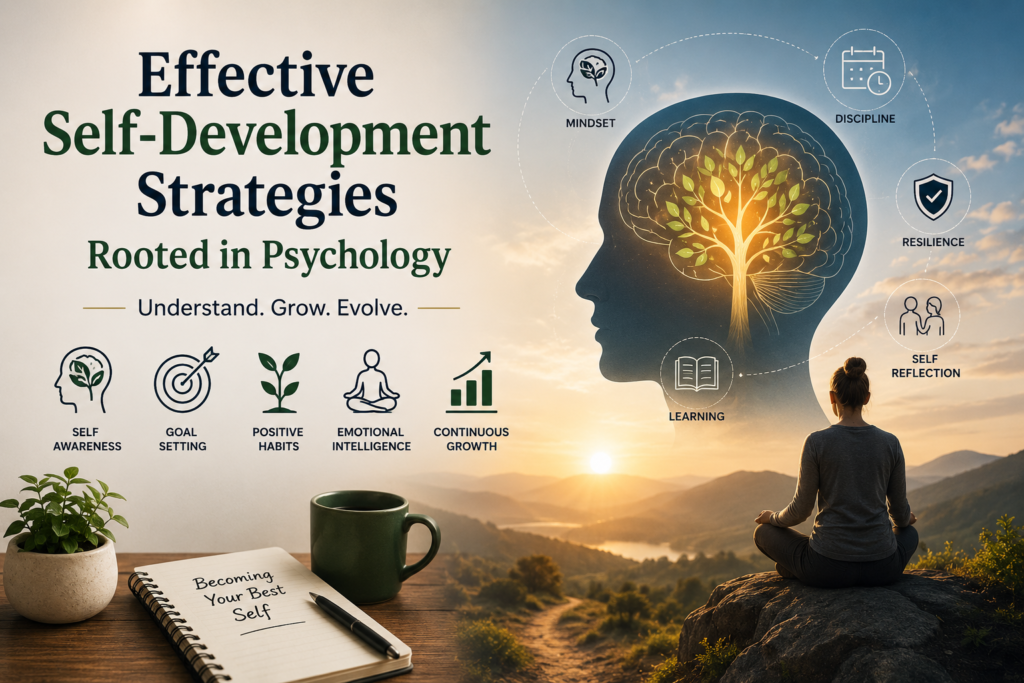
Self-development is about deepening your understanding of personal capabilities and emotional intelligence. This process goes beyond mere improvement; it also includes emotional growth and fostering better interpersonal relationships. With a growing interest in psychological principles, many individuals are searching for effective self-development strategies that provide meaningful insights and actionable methods.
In This Article
In this article, we will examine various self-development strategies grounded in psychological research. We will outline what these strategies entail, how they can boost emotional intelligence, and offer practical techniques that can be seamlessly integrated into your daily routine. Whether you aim to build resilience, enhance relationships, or gain a clearer understanding of yourself, the insights shared here will serve as valuable resources for your personal growth.
Understanding Self-Development Through Psychology
At its essence, self-development involves enhancing skills, knowledge, and emotional intelligence. This holistic approach encourages individuals to cultivate positive changes in their lives. Psychological theories offer frameworks for understanding how we can evolve. For instance, Maslow's Hierarchy of Needs emphasizes the importance of self-actualization, where individuals strive to fulfill their innate potential.
Moreover, concepts like Carol Dweck’s growth mindset suggest that abilities can be cultivated through dedication and effort. This perspective is crucial for anyone engaged in self-development, as it nurtures resilience and fosters a willingness to learn from setbacks. By understanding these psychological principles, you can navigate your personal growth more effectively and implement strategies tailored to your unique circumstances.
Emotional Intelligence: The Key to Personal Growth
Emotional intelligence (EI) is a fundamental aspect of personal development. It involves recognizing and managing your own emotions while also understanding the emotions of others. Daniel Goleman, a leading figure in emotional intelligence research, highlights its significance for both personal and professional success in his book, Emotional Intelligence: Why It Can Matter More Than IQ.
To enhance your emotional intelligence, consider implementing strategies such as active listening, practicing empathy, and developing self-regulation. Engaging in reflective practices, like journaling, can provide insights into your emotional responses and improve your interactions with others. By prioritizing the development of emotional intelligence, you can forge deeper connections and lead a more fulfilling life.
Effective Techniques for Personal Growth
Employing psychological techniques can be highly effective for personal growth. Cognitive-behavioral strategies, for example, focus on identifying and altering negative thought patterns. Judith Beck’s Cognitive Behavior Therapy: Basics and Beyond offers practical techniques that can be applied in everyday situations. These methods help challenge unhelpful beliefs and replace them with constructive thoughts, paving the way for meaningful change.
Mindfulness practices, as discussed in Jon Kabat-Zinn’s Wherever You Go, There You Are, encourage being present and aware of your thoughts and feelings without judgment. Incorporating mindfulness into your routine can enhance self-awareness and emotional regulation, ultimately contributing to your personal growth.
Recommended Resources for Self-Development
If you're committed to your self-development, several resources can guide you along the way. A selection of psychology-based self-help books can provide invaluable insights and practical advice. Here are a few highly recommended titles:
- "Emotional Intelligence: Why It Can Matter More Than IQ" by Daniel Goleman – This book offers a comprehensive look at emotional intelligence and its impact on success.
- "Mindset: The New Psychology of Success" by Carol S. Dweck – Dweck's exploration of the growth mindset encourages readers to embrace challenges and learn from failures.
- "Flourish: A Visionary New Understanding of Happiness and Well-Being" by Martin Seligman – Seligman’s work delves into positive psychology and the elements of well-being.
- "Cognitive Behavior Therapy: Basics and Beyond" by Judith Beck – A practical guide to using cognitive-behavioral techniques for self-improvement.
- "Wherever You Go, There You Are" by Jon Kabat-Zinn – This book introduces mindfulness practices that can be easily integrated into daily life.
These resources offer both theoretical insights and practical techniques that you can apply to support your self-development.
Overcoming Psychological Barriers to Growth
While the path of self-development can be rewarding, it often presents challenges. Common psychological barriers, such as fear of failure, low self-esteem, and negative self-talk, can impede progress. Recognizing these barriers is the first step toward overcoming them.
To address these challenges, consider employing cognitive-behavioral techniques to reframe negative thoughts and beliefs. Surrounding yourself with supportive individuals and engaging in positive affirmations can also help build confidence. Keep in mind that growth is not always linear; it requires patience and persistence. By confronting these psychological barriers, you can create a pathway for meaningful and lasting change.
Frequently Asked Questions
What are the most effective self-development strategies based on psychology?
Effective strategies include cognitive-behavioral techniques, emotional intelligence development, and mindfulness practices. These approaches are grounded in psychological theories that facilitate personal growth.
How can I improve my emotional intelligence using psychological techniques?
You can enhance emotional intelligence by practicing active listening, developing empathy, and engaging in self-reflection. Techniques such as journaling can also help improve your understanding of your emotions.
Are there specific psychological theories that support personal growth?
Yes, theories such as Maslow's Hierarchy of Needs and Carol Dweck’s growth mindset provide frameworks for understanding personal growth and the importance of striving for one’s potential.
What role does mindfulness play in self-development?
Mindfulness increases self-awareness and emotional regulation. It encourages individuals to remain present and non-judgmental about their thoughts and feelings, which can enhance personal growth.
Can self-help books based on psychology really make a difference?
Absolutely. Psychology-based self-help books provide valuable insights and practical techniques that can support your self-development and encourage positive change.
How can I apply cognitive behavioral techniques to my daily life?
You can apply cognitive-behavioral techniques by identifying negative thought patterns, challenging those thoughts, and replacing them with positive affirmations or realistic alternatives.
What are some common psychological barriers to personal growth?
Common barriers include fear of failure, self-doubt, and negative self-talk. Recognizing these barriers is crucial for overcoming them and advancing in your personal development.
How do I measure my progress in self-development?
You can measure your progress through self-reflection, setting specific goals, and tracking your achievements over time. Journaling can also be an effective way to monitor your growth.
Conclusion
Engaging in self-development strategies rooted in psychology can enhance your emotional intelligence and foster personal growth. By understanding psychological principles, applying effective techniques, and utilizing recommended resources, you can achieve meaningful change. Remember, the journey toward self-improvement is ongoing and requires commitment. Start implementing these strategies today to work toward a more fulfilling life.