
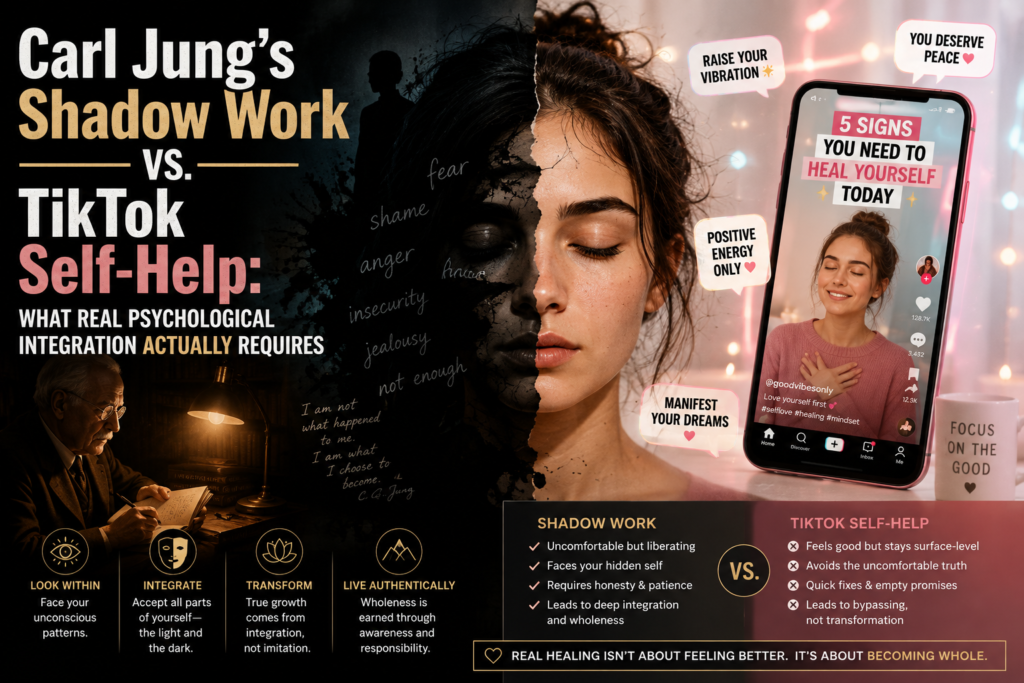
Carl Jung's Shadow Work vs. TikTok Self-Help
Quick Answer
In This Article
Carl Jung's shadow work is a profound process of integrating the unconscious self, fostering personal growth and psychological balance. In contrast, TikTok self-help often presents oversimplified advice that lacks the depth and understanding needed for true psychological integration.
Understanding the intricacies of our psyche has never been more important, especially in a world inundated with self-help advice. As individuals seek to improve their lives, the contrast between Carl Jung's deep psychological concepts and the rapid-fire content found on platforms like TikTok becomes increasingly evident. While Jungian shadow work emphasizes the necessity of confronting and integrating our darker, unconscious selves, TikTok often promotes quick-fix solutions that can lead to more harm than good. This article delves into these two approaches to self-improvement, highlighting what genuine psychological integration entails.
As we explore the nuances of mental health and personal development, it is crucial to understand that not all self-help content is created equal. Jung's insights provide a roadmap for authentic growth, while the self-help trends on TikTok can distract from the deeper work necessary for meaningful change. By examining the differences between these approaches, readers can gain a clearer perspective on their self-improvement efforts.
Key Takeaways
- ✓Carl Jung's shadow work involves deep psychological integration, requiring acknowledgment of the unconscious self.
- ✓TikTok self-help often simplifies complex psychological concepts, promoting surface-level insights that may hinder genuine growth.
- ✓Engaging in authentic shadow work can lead to profound personal transformation and emotional well-being.
Understanding Shadow Work
At its core, shadow work, according to Carl Jung, is the process of confronting and integrating the shadow self—those parts of our personality that we may deny or repress. This concept is rooted in the belief that acknowledging these hidden aspects can lead to personal growth and a more balanced psyche. Jung posited that the shadow contains not only our fears and insecurities but also our potential for creativity and strength. By embracing and incorporating these aspects into our conscious self, we can achieve a fuller, more authentic existence.
A critical element of shadow work is understanding that it requires a commitment to self-reflection and emotional awareness. It is not merely about identifying negative traits but also recognizing the positive potential within our shadow. This journey can be challenging but ultimately rewarding, as it fosters resilience and self-acceptance.
The Rise of TikTok Self-Help
In recent years, platforms like TikTok have revolutionized the self-help landscape, making psychological concepts more accessible to a broader audience. However, this accessibility often comes at a cost. TikTok self-help is characterized by bite-sized videos that promise quick fixes and instant solutions to complex emotional issues. The brevity of the content can lead to oversimplification, where nuanced psychological concepts are reduced to catchy phrases or trends.
The allure of TikTok self-help lies in its immediacy and relatability. Many creators share their personal experiences, creating a sense of community and support. However, the risk is that these platforms may inadvertently perpetuate misconceptions about mental health and personal growth. Without a solid foundation in psychological principles, viewers may find themselves following advice that lacks depth or efficacy.
The Pitfalls of Oversimplified Self-Help
One of the significant dangers of engaging with surface-level self-help content is the potential for misunderstanding and misapplying psychological concepts. TikTok self-help often promotes ideas that sound appealing but may not hold up under scrutiny. For instance, the suggestion to "just be positive" can downplay the importance of processing negative emotions and experiences.
Moreover, engaging in superficial shadow work—such as merely acknowledging negative traits without deeper analysis—can lead to frustration and a sense of failure. Individuals may feel they have "done the work" by following trends, only to discover that their issues remain unresolved. This cycle can discourage genuine exploration and hinder authentic psychological integration.
Authentic Practices for Shadow Integration
For those seeking true psychological growth, authentic shadow work involves several key practices. These include journaling, therapy, and creative expression, which can facilitate deeper self-exploration and emotional awareness.
Journaling
Writing about your thoughts and feelings can help clarify your understanding of the shadow self. By reflecting on your experiences, you can identify patterns and confront aspects of yourself that may be uncomfortable. This practice allows for a deeper connection to your inner self, paving the way for integration.
Therapy
Working with a mental health professional can provide the guidance and support necessary for meaningful shadow work. Therapists can help individuals navigate their unconscious patterns, offering tools and techniques to foster psychological integration. This professional relationship is invaluable in ensuring that the work is grounded in a solid understanding of psychological principles.
Creative Expression
Engaging in artistic activities, such as painting, music, or dance, can also serve as a powerful form of shadow work. Creative expression allows individuals to explore their emotions and experiences in a non-linear way, often revealing insights that may not surface through traditional self-reflection.
Bridging the Gap Between Theory and Practice
Implementing Jungian concepts into daily life requires dedication and a willingness to engage with the complexities of the self. It is essential to seek out resources that emphasize a holistic approach to psychological integration. This includes communities that encourage open discussions about mental health and platforms that prioritize education over quick fixes.
Additionally, finding professional guidance can help individuals navigate the intricacies of shadow work. Therapists, support groups, and workshops can provide the necessary framework for authentic growth, ensuring that individuals do not feel isolated in their journey.
Key Differences at a Glance
| Aspect | Carl Jung's Shadow Work | TikTok Self-Help |
|---|---|---|
| Definition | Involves confronting and integrating unconscious aspects of the self | Often oversimplified and focuses on quick fixes |
| Depth of Insight | Emphasizes genuine psychological integration and personal growth | Tends to provide surface-level insights and misconceptions |
| Techniques | Utilizes methods like journaling, therapy, and creative expression | Lacks depth in recommended practices, often promoting trends |
| Risks | Engaging in shadow work without proper understanding can lead to deeper issues | Superficial approaches may hinder true psychological growth |
| Target Audience | Self-improvement readers seeking meaningful engagement | Individuals looking for quick solutions and surface-level advice |
Frequently Asked Questions
What is shadow work according to Carl Jung?
Shadow work, as defined by Carl Jung, involves confronting and integrating the unconscious aspects of the self. It requires acknowledging the shadow self, which includes both negative traits and hidden potential, to achieve personal growth and psychological balance.
How does shadow work contribute to psychological integration?
Shadow work contributes to psychological integration by helping individuals recognize and accept their unconscious traits. By embracing these aspects, individuals can achieve greater self-awareness and emotional resilience, leading to a more balanced and authentic life.
Why is TikTok self-help often seen as superficial?
TikTok self-help is often seen as superficial because it tends to oversimplify complex psychological concepts into catchy phrases and quick tips. This brevity can lead to misunderstandings and a lack of depth in addressing genuine emotional issues.
What are the risks of engaging in surface-level shadow work?
Engaging in surface-level shadow work can result in frustration and a sense of failure, as individuals may feel they have "done the work" without addressing deeper issues. This approach can hinder genuine psychological integration and personal growth.
How can I start authentic shadow work?
To start authentic shadow work, consider journaling your thoughts and feelings, seeking therapy for professional guidance, and engaging in creative expression to explore your emotions. These practices can facilitate deeper self-exploration and integration.
What are the key principles of Jungian psychology?
Key principles of Jungian psychology include the concepts of the unconscious, archetypes, and the importance of integrating the shadow self. Jung emphasized the necessity of self-reflection and emotional awareness for personal growth.
How do I differentiate between real psychological help and social media trends?
To differentiate between real psychological help and social media trends, seek resources grounded in established psychological principles. Look for content that emphasizes depth, encourages self-exploration, and promotes professional guidance rather than quick fixes.
What tools or practices are recommended for deep psychological work?
Recommended tools for deep psychological work include journaling, therapy, creative expression, and mindfulness practices. These techniques foster emotional awareness and facilitate genuine self-exploration.
Conclusion
Navigating the landscape of self-improvement requires discernment, particularly when contrasting Carl Jung's profound insights on shadow work with the quick-fix mentality prevalent in TikTok self-help. Understanding the complexities of shadow work is crucial for authentic personal growth and psychological integration. By engaging in deeper practices and seeking professional guidance, individuals can embark on a transformative journey that prioritizes genuine self-discovery over superficial trends. Embrace your path toward self-awareness and take the first step by exploring the depths of your shadow self.